We want to clear up the confusion about blockchain, the technology that powers cryptocurrencies and a growing number of decentralized apps. Blockchain is a groundbreaking distributed ledger technology (DLT) that goes beyond the financial news. It has the ability to change sectors, provide new ways for people to communicate online, and change what it means to trust someone in the digital age.
Taking Apart the Core Technology
 Core Principles: The Building Blocks of Blockchain’s New Ideas
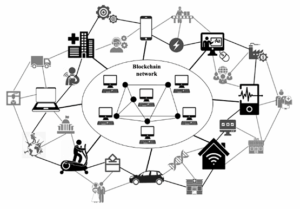 Core Principles: The Building Blocks of Blockchain’s New Ideas
There are a few important factors that set blockchain apart from other database systems and give it its transformational ability. Decentralization is the most important thing that makes blockchain what it is. In a traditional system, one person or organization (like a bank or a central server) is in charge of and checks data. In a blockchain, control is spread out throughout a large network of users. This gets rid of single points of failure, which makes the system harder to attack, censor, and change. It is almost hard to edit or delete data that is kept on a blockchain. The chain is safe because every record of operations is linked to the one before it.
How Blockchain Works: From Transactions to Agreement
Knowing how a blockchain works shows how smartly it was made to preserve records that are safe and can be verified. “Blocks” are how a blockchain works. They group transactions together. A block is sealed with a unique “hash,” which is like a digital fingerprint, once it is full of legitimate transactions. The new block has this hash and the hash of the block before it. The “chain” is made via this linking system. Every time a new block is added, it makes all the old ones safer. This is because a large, active network can’t change any historical data without re-calculating the encryption keys of all of the blocks that came after it. Before a new block can be added to the chain, everyone on the network must agree that it is valid.. Consensus techniques help people agree on this. Proof-of-Work (PoW) and Proof-of-Stake (PoS) are examples of algorithms that make sure that all the nodes in a network check and agree on the validity of transactions and the right order of blocks. This democratic approach stops any one person from getting too much power or adding false information.
Blockchain may be Used for a Lot of Things Outside Money
Most people know about blockchain because of its application in cryptocurrencies, but it can also help address problems in a lot of other areas. Blockchain makes supply networks more open and traceable than ever before. This makes clients feel better about doing business with you and helps your business run more smoothly and acquire trust. Blockchain is also going to transform how we manage our online identities. Blockchain can let people have their own identities instead of relying on centralized systems that store a lot of personal information. People would have their own digital credentials and be in charge of them.
Final Statement
“About Blockchain” seeks to explain how this technology will impact the world in ways that aren’t simply about making money. Decentralization, immutability, and transparency, together with robust consensus mechanisms, are the main ideas that make it a good starting point for making systems that don’t need trust. Blockchain has real-world answers that are impossible to ignore, like making the supply chain more visible and changing how we think about digital identity. As its uses increase and improve, blockchain will enable us all have a digital future that is safer, more open, and more connected.
Explore how blockchain can transform your enterprise today
Konomi is a blogging website that goal is to publish articles related to Crypto (as a technology, not finance).